

How to Pass the NCLEX
If you're frustrated by not passing the NCLEX after multiple attempts, I've mapped out a simple easy-to-follow guide just for you.
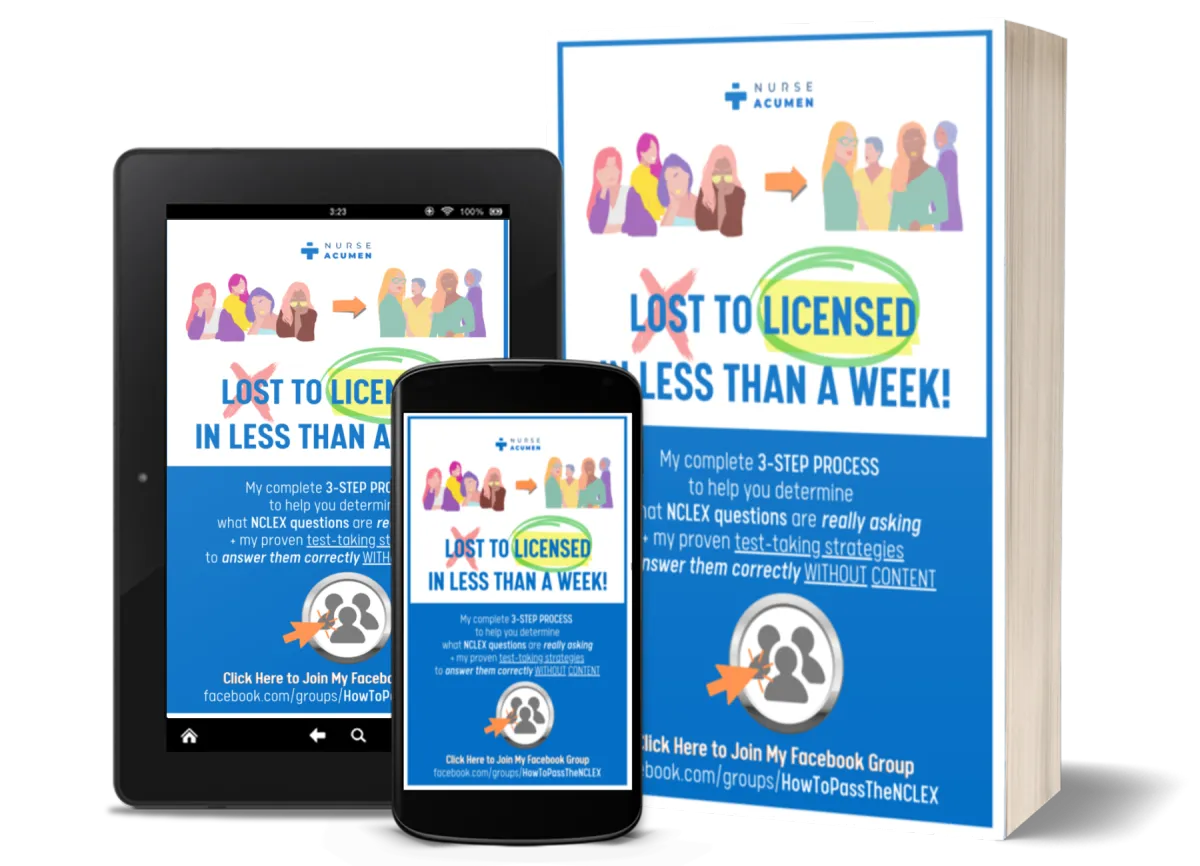
Learn the 3 steps to understanding what NCLEX-style questions are really asking, and the specific test-taking strategies to correctly answer them WITHOUT CONTENT!

Changes in the NGN
“By failing to prepare, you are preparing to fail.” - Benjamin Franklin
Why the changes?
The Next Generation NCLEX (NGN) is a test that people who want to be nurses in the United States have to take. The test helps to see if they know enough to safely practice as a paid nurse.
Recently, they added new questions to the test to make sure that nurses know how to keep their patients safe, use technology, and know about new types of nursing jobs.
This means that nurses have to learn new things to be ready for the test. It's important to pass the NGN so that nurses can take care of their patients and do a good job.
With that said, here's an overview of the changes in the NGN! 👊
What Changed?
The NGN is an essential component of the nursing profession, ensuring that registered nurses possess the necessary skills and knowledge to provide quality care to their patients. With the recent changes made to the exam, nurses are expected to have a more comprehensive understanding of patient safety, technology, and emerging nursing specialties. The nursing education system has embraced these changes, and instructors have integrated updated materials in their curricula to ensure that students are adequately prepared to take the updated NGN exam.
Recently, changes have been made to the NCLEX (now called the NGN) to ensure that the test remains relevant and up-to-date with the latest nursing practices.
One significant change in the NGN is the increased emphasis on patient safety. The test aims to assess the ability of the test-takers to provide appropriate care to their patients, which includes identifying potential risks and taking measures to prevent them. The NGN also focuses on the nurses' ability to prioritize patient needs, which is crucial in the fast-paced and ever-changing healthcare environment.
Another change in the NGN involves technology. Nurses must be comfortable using technology to access patients' electronic health records, communicate with other healthcare professionals, and monitor their patients' vital signs. The NGN now includes questions that test the nurse's ability to utilize technology correctly and efficiently.
Also, the NGN has adapted to include newer nursing specialties. As nursing practice continues to evolve, new specialties such as forensic nursing and informatics have emerged. The updated NGN now includes questions on these newer specialties to ensure that graduate nurses possess a broad range of knowledge and are capable of giving quality care in their specialized areas. These changes have significantly impacted the way test-takers prepare and approach the NGN exam.
Impacts of Recent Changes
The changes in this exam have not only affected the test-takers but also impacted the nursing profession as a whole. Because of the changes, teachers are teaching students differently so they can pass the new test. The changes also mean that hospitals and other places that hire nurses want to hire people who pass the test on their first try. Overall, the NGN changes are making nursing better and helping people get better care.
One of the significant impacts of the recent changes in the NGN is that the exam has become more rigorous and challenging. The changes have been implemented to ensure that nurses have the necessary competencies to provide safe and effective patient care. The new exam format and content require students to have a higher level of critical thinking, decision-making, and clinical judgment skills than before. As a result, many nursing students are finding it difficult to pass the exam on their first attempt, which has become a significant concern for educators and students alike.
Another impact of the recent changes in the NGN is that it has sparked a shift in how nursing students are being taught. The new exam content has highlighted the need for an emphasis on advanced clinical practice and prioritizing patient safety. As a result, nursing educators are shifting their teaching strategies to prepare students for the revised exam content. The focus now is not only on ensuring that students have the competence to pass the NGN exam but also on developing the analytical and critical thinking skills that are vital in delivering effective patient care.
The recent changes in the NGN are having a significant impact on the nursing profession at large. Healthcare organizations are looking to hire nurses who have successfully passed the NGN examination on their first attempt. Additionally, the revised NGN exam aims to ensure that nurses have the skills and knowledge required to deliver safe and competent patient care in a rapidly changing healthcare environment. These changes have, therefore, raised the standards of the nursing profession and underscored the vital role that nurses play in the healthcare system.
Passing Standards on the NGN
The exam has undergone numerous changes throughout the years, including changes in passing standards. The passing standards on the NGN refer to the minimum score required for a candidate to pass the exam. Now they ask harder questions and it's harder to pass. But this will help make sure nurses are good at their job and can take good care of patients. It's important for nurses to learn how to think carefully and do their best on the test.
In recent years, there has been a significant shift in the passing standards on the NGN. Prior to 2016, the exam followed a “criterion-referenced” model, meaning that passing was determined by meeting a predetermined standard. However, in 2016, the National Council of State Boards of Nursing (NCSBN) announced that they would be switching to a “cognitive ability” model, which determines passing based on the candidate’s ability to answer questions correctly. This change was made to better evaluate a candidate’s readiness to enter the workforce and provide the best care possible.
The new cognitive ability model has led to a shift in the passing standard, with many candidates finding it harder to pass the NGN. In some cases, the new passing standard has been raised by one to two percentage points. The NCSBN believes that this change in passing standards will ultimately lead to better patient care and safer nursing practices. Nurses who pass the NGN now have demonstrated a higher level of cognitive ability, which is essential for providing safe and effective patient care.
Overall, the changes to the passing standards on the NGN reflect a shift in the nursing profession towards a focus on critical thinking and patient safety. Aspiring nurses must now prepare diligently for the exam, and nursing schools must emphasize the importance of critical thinking in their curriculum. While the new passing standards may present challenges for some candidates, they ultimately serve to improve the quality of nursing care and profession as a whole.
New Scoring System on the NCLEX
Recently, changes have been made to the format of the NCLEX exam, making it more challenging for test-takers. One of the significant changes that have been made to the NCLEX exam is the implementation of a new scoring system. The National Council of State Boards of Nursing (NCSBN) introduced the Next Generation NCLEX (NGN) scoring system, replacing the traditional linear exam method.
The NGN scoring system features a complex algorithm that assesses a candidate's abilities based on their performance throughout the exam. The new scoring system aims to enhance the accuracy of the test results and provide a more comprehensive assessment of the student's knowledge and skills. Candidates will be assessed based on how they approach various nursing scenarios, including clinical decision-making, prioritizing patient care, and delegation. This examination method will require candidates to think critically, analyze problems, and develop effective intervention strategies.
The NGN scoring system enables the elimination of standard template answers that candidates could memorize and predict previously. It has redefined how traditional exams assess cognitive abilities and promote a better approach to testing.
Additionally, the NGN scoring system's experimental format requires mastery of higher-level thinking skills, which can only be achieved through a balance of knowledge and practical skills. While the new scoring system might be more challenging, the ultimate goal is to prepare future nurses to provide the best care for patients and safeguard public health.
This new scoring system will test the nurses by asking them to think about how to help patients in different situations. It will make sure that nurses really know what they're doing and can think through problems. Even though it might be harder, it will help prepare nurses to take care of people better.
Preparing for the NGN with Recent Changes
There are some new kinds of questions on the exam that test how good they are at thinking critically. The exam is also getting longer in 2023, so nurses need to be ready and prepared to stay focused for a longer time. To pass the NGN, nurses need to study hard and be ready for these changes. There are many resources available to help them prepare, like online materials.
The biggest change that has occurred to the NGN exam preparation is the introduction of alternative item types (AITs). These AITs are in addition to the traditional multiple-choice questions. The new question types assess the candidate's critical thinking skills, including prioritization, decision-making, and clinical judgment. These AITs include multiple-choice, ordered response, fill-in-the-blank, hot spots, and chart exhibits.
Another important change is the length of the NGN experience. In 2023, the NGN experience will be increased by 2 hours. Candidates will now have a total of 5 hours to complete their exam, with two optional breaks. Adequate preparation and stamina are critical to ensure that candidates remain alert and focused throughout their exam.
Preparing for the NGN with recent changes requires a better understanding of the new alternative item types and increased testing time. Being prepared well in advance and studying effectively is crucial for nurses to pass the NGN and achieve their professional license. By taking advantage of recent changes in NGN preparation materials and utilizing online resources, nurses can get the help they need to succeed in their careers.
Final Thoughts
In conclusion, the recent changes in the NGN have had a profound impact on nursing students, educators, and healthcare organizations. The new exam format and content are more rigorous and challenging, requiring students to have higher-level critical thinking and decision-making skills.
The changes in the NGN have also sparked a shift in nursing education, emphasizing advanced clinical practice and prioritizing patient safety.
Finally, the revisions in the NGN aim to raise the standards of the nursing profession and highlight the important contribution that nurses make to the healthcare system.

NEXT GENERATION NCLEX "CLEAR PASS" CHECKLIST:
Here's a quick checklist to help you prepare to pass the Next Generation NCLEX. Remember imperfect action beats inaction, so get started and let's get licensed!
Understand the test format
Know the test content
Get help if needed. If you are stuck, you can get help here
Create a study plan
Use study materials
Take practice tests
Focus on your weak areas
Stay organized
Take care of yourself
© 2023 Nurse Acumen Coaching LLC. All rights reserved.